Sponsored by Sunnyside Med
Health › Alcohol & Wellness
There's a 30-Year-Old Medication That Quiets the Urge to Keep Drinking. Almost Nobody's Heard of It — Including Most Doctors.
It's not new, it's not experimental, and it's not what you think. It's just never been offered to people who aren't already in crisis. Until now.
The Part Nobody Talks About
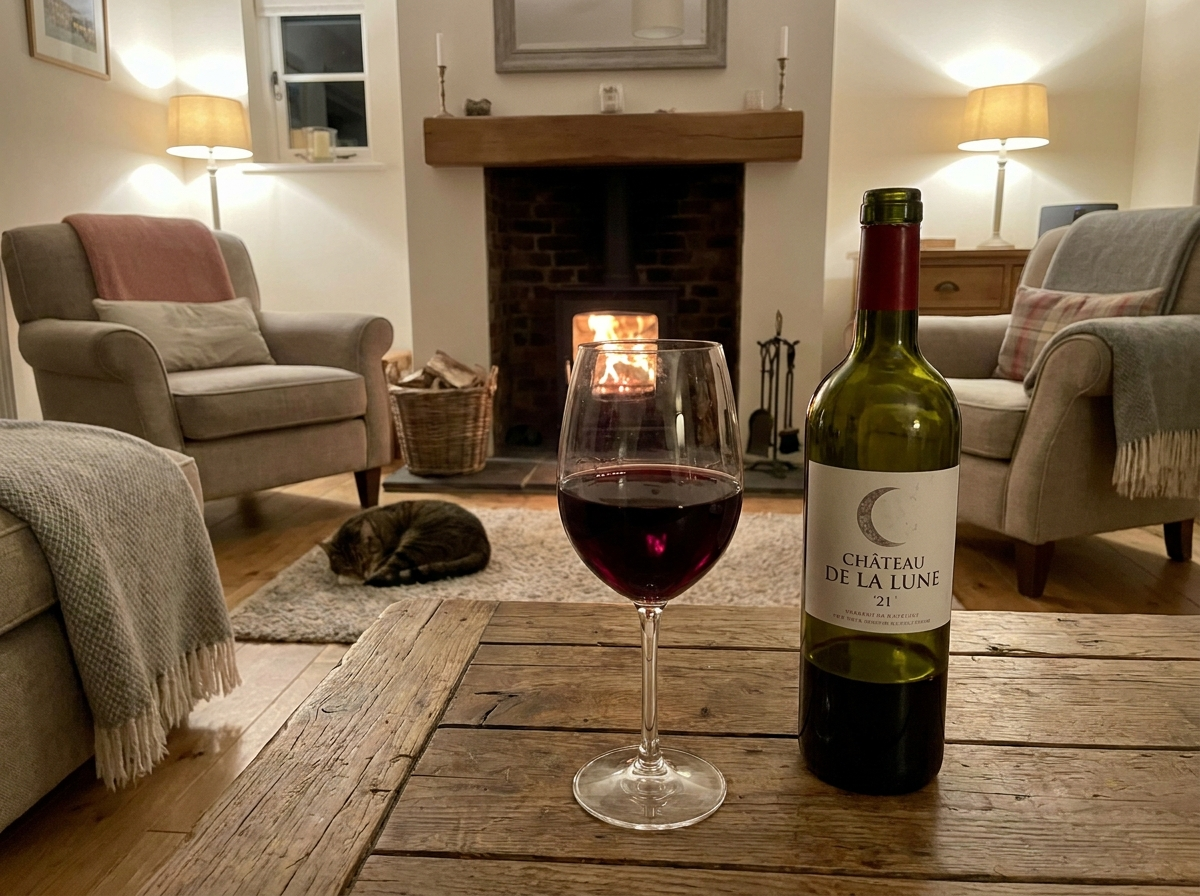
Most people who want to drink less aren't hiding some big rock bottom story. They're just tired of the same pattern. One drink turns into three. Most weeks look the same. And more than once, late at night, they've Googled some version of "am I drinking too much" and closed the tab before finishing the search.
Here's the part that makes this confusing. Almost everything you hear about drinking treats it like a light switch. You're either fine, a normal drinker, nothing to think about, or you have a serious problem that needs a program, a label, maybe rehab. There's not much room for anything in between.
Most people don't fit either box. They're functional. They show up for work, for their kids, for their life. But privately, they're uneasy. They know they're drinking more than they want to, and they don't love how it makes them feel the next morning, or the next week, or the next month of weeks that all look the same.
That space in between has a name. We call it the gray area. It's not a diagnosis. It's just where most people with a drinking pattern they'd like to change actually live.
“Not in crisis. Not fine either. Just tired of the same pattern.”
If that's you, you've probably already tried the usual stuff. Willpower. A dry month. White knuckling it without support. Setting a rule on Sunday and breaking it by Thursday. Maybe it worked for a week. Maybe it worked for a night. Then it quietly stopped, and you were back where you started, wondering what was wrong with you.
Here's the thing. Nothing is wrong with you. None of that was wrong to try. It just doesn't touch the one part that actually makes stopping so hard once you've started. That part isn't a character flaw. It's a specific mechanism in your brain, and almost nobody explains what it actually is.
Why This Feels So Hard to Control
There's a reason this isn't just about willpower. It's happening at the level of brain chemistry, and once you see the mechanism, the whole thing makes a lot more sense.
Step 1
You have a drink
Step 2
Your brain releases endorphins, its own natural feel-good chemicals
Step 3
Those endorphins activate brain receptors, the same ones involved in its reward system
Step 4
That activation creates the rewarding buzz that makes you want another one
In plain language: alcohol doesn't feel good on its own. Your brain releases its own chemicals in response to it, and those chemicals lock onto specific receptors that create the reward signal. That's the pull. That's the part that turns one drink into three.
It's not just the drink itself, either. Over time, your brain starts anticipating that reward before you've even had a sip. Planning a night out, or just thinking about the glass waiting for you at home, can fire up the same pathway. That's why the craving often shows up before the drinking does.
This is why "just deciding" to have less doesn't reliably work. You're not fighting a lack of discipline. You're fighting a reward loop your brain has practiced and reinforced, one drink at a time, for years.
Here's the part worth sitting with. If the reward signal is the actual problem, the fix isn't more willpower. It's turning down that signal directly.
What This Alcohol Craving Medication Does
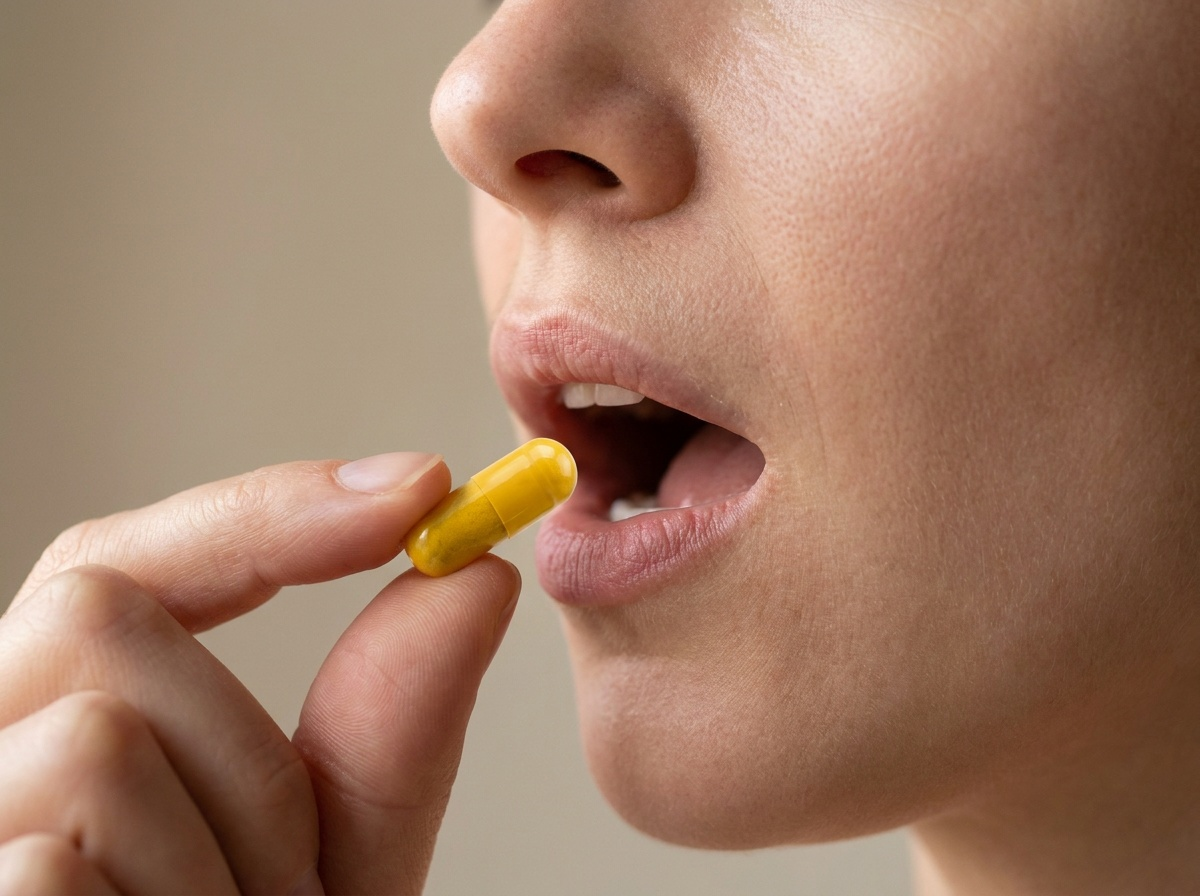
There's a medication called naltrexone. It's not new. It's not experimental. It's been FDA approved since 1994. That's over 30 years.
Here's what it does. It blocks the receptors in your brain that register reward from alcohol, the same ones responsible for that pull toward the next drink. Take that reward signal away, and for a lot of people, the pull toward drink number two or three just gets quieter on its own.
“Naltrexone works by blocking the receptors in the brain that register the feelings of reward and pleasure that many feel from alcohol consumption.”
— Dr. Joseph Volpicelli, M.D., Ph.D., who led the first clinical trial of naltrexone for alcohol dependence
You've probably already heard about GLP-1 drugs like Ozempic quieting "food noise," that constant background hum of thinking about your next meal. Naltrexone does something strikingly similar, just pointed at a different signal.
GLP-1s → Food Noise
Drugs like Ozempic became famous for quieting food noise. The constant background hum of thinking about your next meal, turned down.
Naltrexone → Alcohol Noise
Same idea, different signal. The pull toward the next drink gets quieter, so one doesn't automatically turn into three.
People describe it as the alcohol noise going quiet. The planning. The anticipating. The low grade math around your next drink. Fading into the background.
So if this medication works, and it's been around for 30 years, why isn't everyone already on it?
Why Doesn't Everyone Know About This?
2.5%
of the people who could benefit from naltrexone are actually using it.
Here's the part that's honestly a little crazy. A medication that's FDA approved, well studied, and safe enough to have been prescribed for three decades. And only about 2.5% of the people who could benefit from it are actually using it.
Not because it doesn't work. Because most people have never heard it exists.
It's been written about in the New York Times, National Geographic, and PBS NewsHour. And still, most people find out about it from a friend, a Reddit thread, or an ad. Not from their own doctor.
Measurement
Result
FDA approval for alcohol use disorder
1994
Years of clinical use
30+
Reported reduction in heavy drinking (clinical studies)
Over 50%
Why Doctors Don't Bring It Up
Patients stay quiet
It never feels bad enough to bring up, so it never comes up.
No one markets it
Generic for years. No sales reps, no conferences, no reminders.
Barely taught
Addiction medicine gets a small slice of med school time.
A binary conversation
You're fine, or you have a serious problem. No space in between.
Part of it starts with patients. A lot of people don't think their drinking is bad enough to bring up. So they say nothing, and even a doctor who already knows about naltrexone never gets the chance to mention it.
Part of it is that naltrexone isn't marketed the way most medications are. It's been generic for years, which means no pharmaceutical company owns it or profits enough from it to fund the sales reps, the conferences, or the ongoing education that gets newer, patented drugs in front of doctors constantly. Nobody's knocking on exam room doors talking about it.
Part of it is training. Addiction medicine gets a small slice of time in most medical schools, and a lot of primary care doctors simply never covered medication options for alcohol use in any real depth. It's treated as a specialist topic, not something every doctor is expected to know cold.
There's also a common mentality in how medication gets positioned at all. A lot of clinical thinking treats it as a last resort, something to try only after willpower, therapy, or habit-change apps have already been attempted and failed. That approach makes sense for some things. But it means people often go months or years white-knuckling it before medication ever comes up, when it could have been part of the plan from day one, alongside those other tools instead of after them.
And part of it is bigger than any one appointment. Most doctors talk about drinking in a binary. You're fine, or you have a serious problem that needs abstinence and a program. There's not much room for the space in between. We call that space the gray area, and it's where most people with a drinking pattern they'd like to change actually live. Not in crisis. Not fine either. Just stuck with no real path forward, because the only two categories on offer don't fit.
One of the largest clinical trials on alcohol treatment, called COMBINE, found that naltrexone paired with real behavioral support significantly outperformed either one alone. That's not a small footnote. That's one of the most rigorous studies in the field pointing at the same gap this page is about.
What National Geographic Found
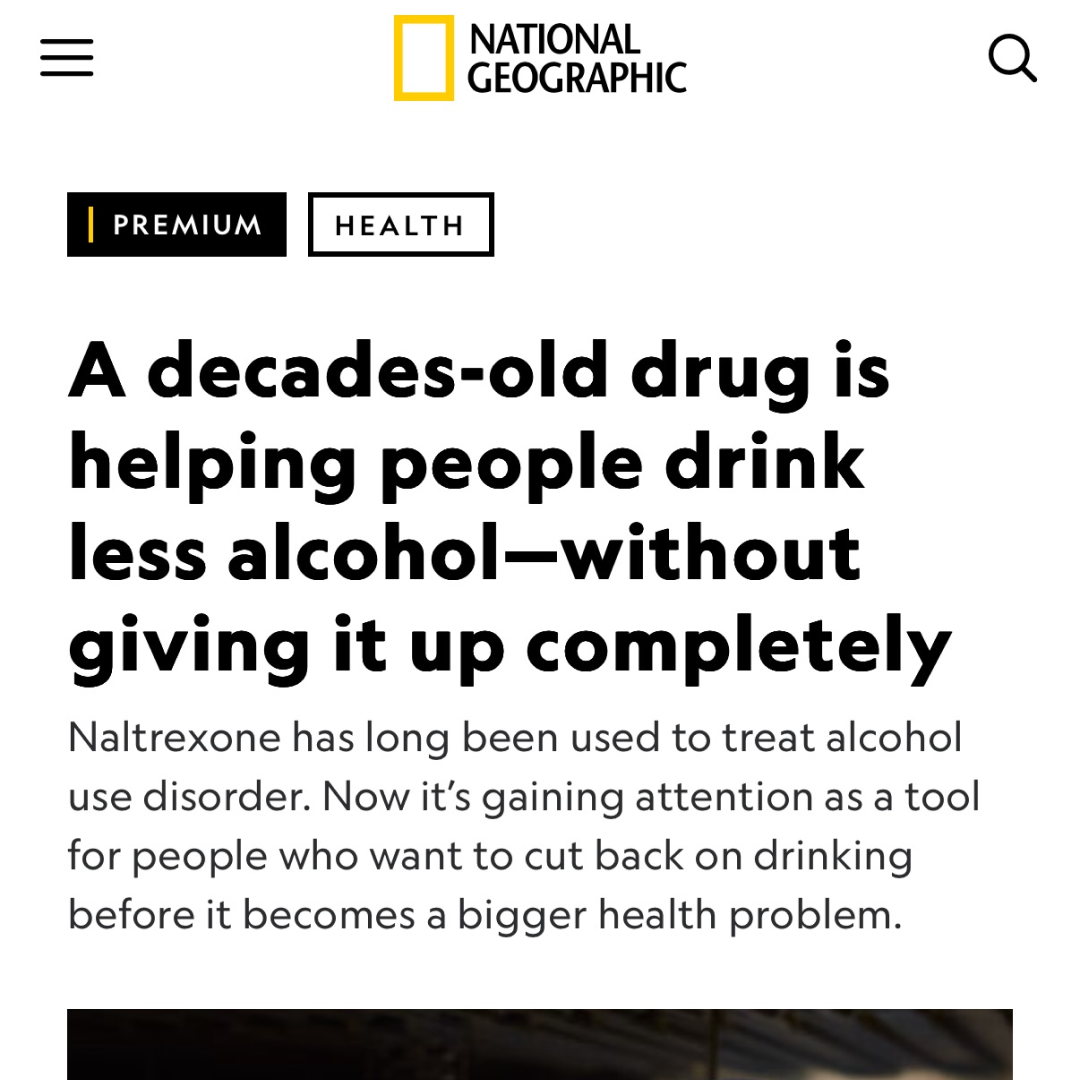
In December 2025, National Geographic ran a feature on exactly this gap. Why a decades old, well studied medication is only now reaching people who aren't in crisis, just people who want to drink less.
Dr. Sarah Wakeman, senior medical director for substance use disorder at Massachusetts General Hospital and Brigham, put it plainly in the piece: physicians themselves are often simply unaware that medication options for alcohol use exist.
The article also connects naltrexone to the exact cultural moment you're probably already thinking of.
“It's like an appetite suppressant for alcohol”
— Dr. Glenn-Milo Santos, UCSF
At the center of the article is Kate, a real Sunnyside member. She'd been drinking about 28 drinks a week. Nothing dramatic had happened, she just felt like it was more than she wanted. Today she's down to a max of 7 drinks a week, with at least 3 full alcohol-free days.
The piece also names the platform that helped her get there directly:
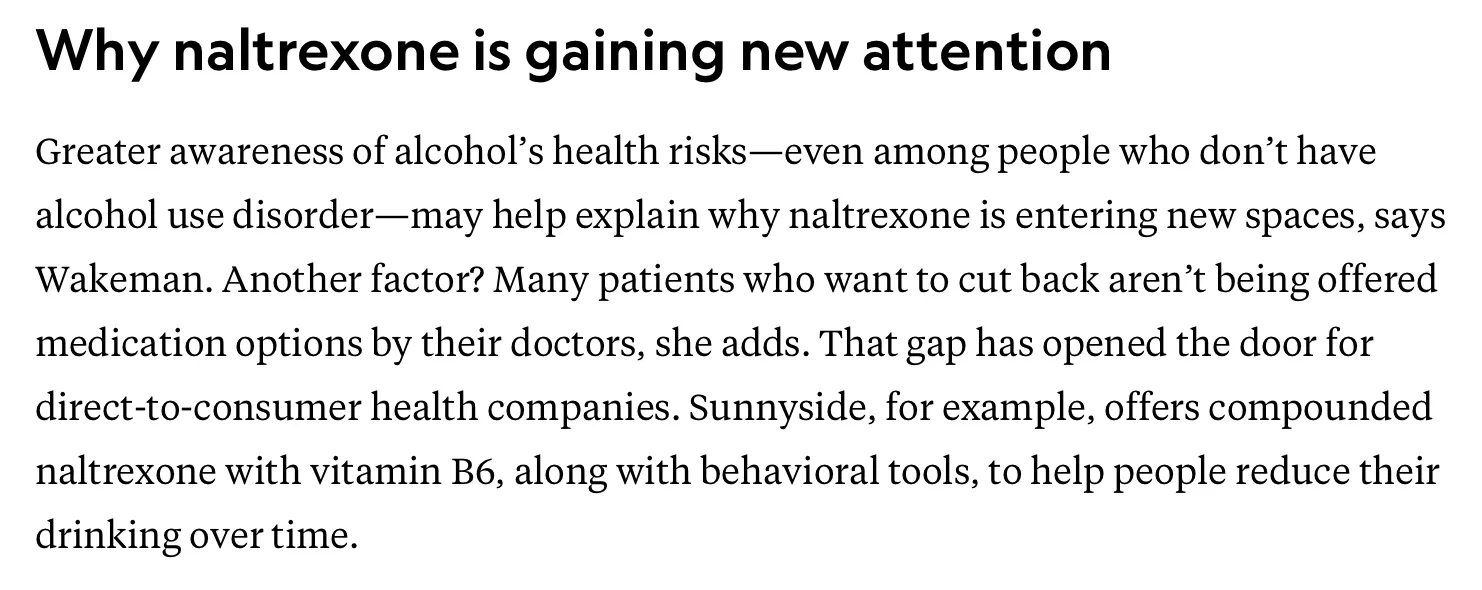
That's Sunnyside Med.
A short assessment, reviewed by our clinical team
Why Sunnyside Med
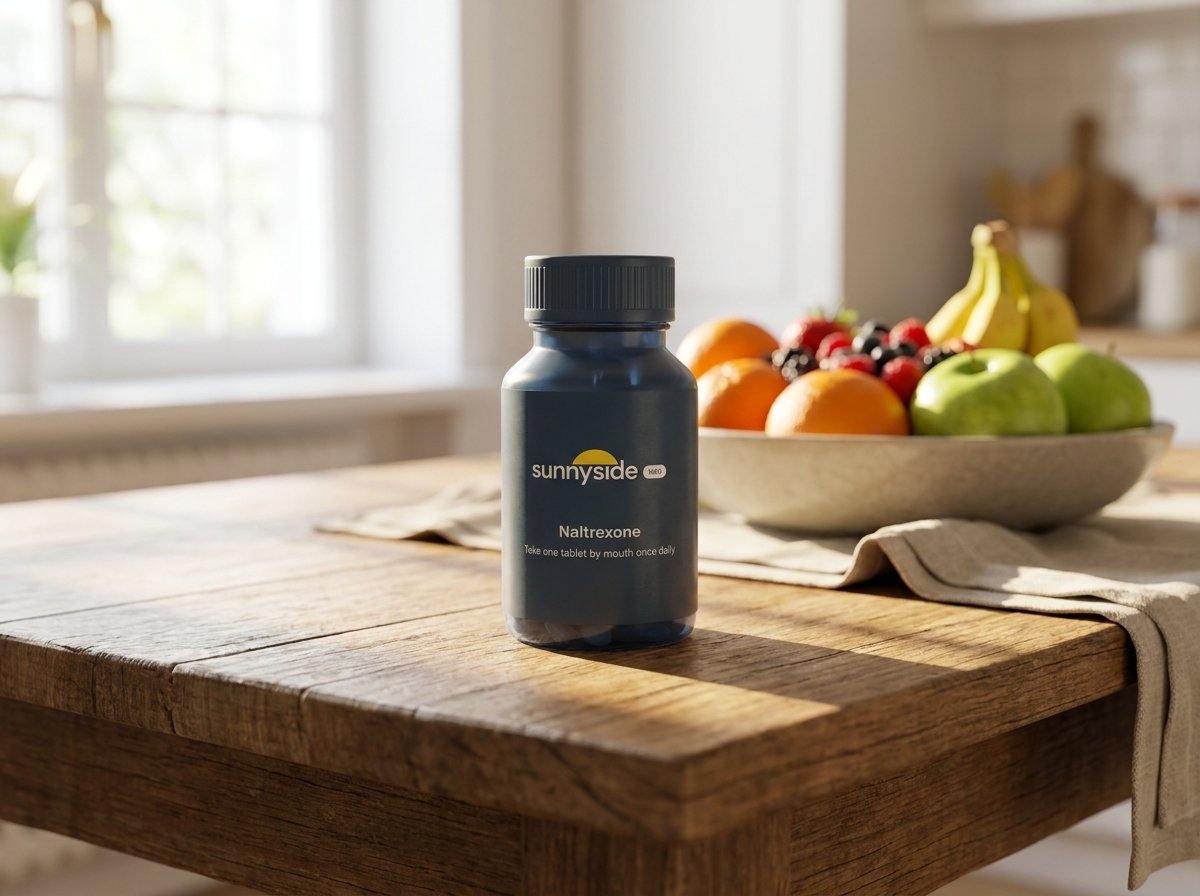
You could take everything on this page to your own doctor and ask about naltrexone directly. Some people do, and that's genuinely fine. Here's why a lot of people end up here instead.
A regular doctor's visit means explaining all of this from scratch, in a ten minute appointment, to someone who might be one of the many physicians the National Geographic piece described as simply not thinking to mention it. You'd be starting the exact conversation this page just walked you through, from zero, with someone who's rushed and may not have heard of the gray area at all.
Sunnyside Med isn't a random online pharmacy that added naltrexone to a list of prescriptions. It's built by the same team behind Sunnyside app, a habit change tool that's helped over 600,000 people change their relationship with alcohol since 2020.
of active Sunnyside Med members achieved meaningful reductions in drinking.
average reduction in drinking among members following the full program.
That's years of experience doing this, at scale, with a licensed medical advisor on staff and real clinicians reviewing every application before anything ships.
No rock bottom required. No group meetings if that's not your thing. Just medication, real coaching, and a clinician making sure it's actually right for you, backed by a company that's already helped hundreds of thousands to find a better relationship with alcohol.
How Sunnyside Med Works
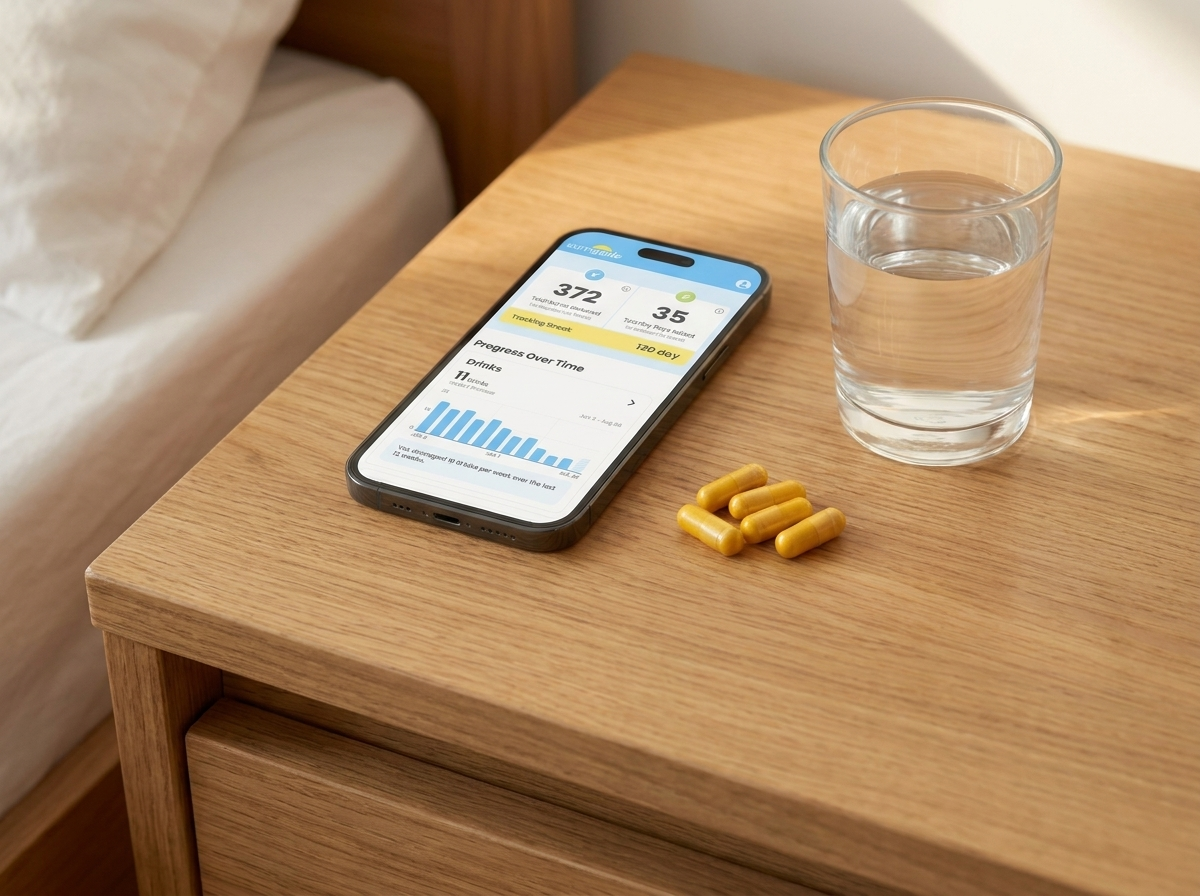
Sunnyside Med pairs compounded naltrexone with vitamin B6, with real behavioral coaching. Prescribed by licensed clinicians. Shipped to your door.
Here's the honest reason it's two things and not one. The medication quiets the reward signal, that's what naltrexone handles on its own. But most people who've been drinking more than they'd like have also built routines around it that a prescription alone won't touch. That's what the coaching and tools are for.
Translation: the medication turns down the craving. The coaching helps you build a new routine around the quiet that's left.
This isn't just our own theory. One of the largest clinical trials on alcohol treatment ever run, called COMBINE, found that naltrexone paired with real behavioral support significantly outperformed either one alone. We built the program around what the research already showed works.
How to get started and what to expect:
- 1
Complete a short online assessment
Questions about your alcohol use and health history. Takes a few minutes, done entirely online.
- 2
A licensed clinician reviews it personally
An actual clinician looks at your history and may follow up with questions before deciding if naltrexone is safe and appropriate for you.
- 3
If approved, your prescription ships to your door
Compounded naltrexone from an accredited pharmacy partner, shipped directly to you.
- 4
You start at a gentler dose that gradually increases
This ramp-up approach reduces the chance of early side effects like nausea, rather than starting at full strength right away.
- 5
Ongoing support kicks in alongside the medication
As you're waiting for medication to arrive, you get access to tracking, coaching, and the Sunnyside community, not just a bottle and a goodbye.
- 6
Refills are opt-in, every three months
Nothing renews automatically without your choice. Cancel anytime, no contract.
No insurance needed, cancel anytime
Reviews
From Sunnyside Med Members
Prescribed by licensed clinicians, shipped to your door
Why Sunnyside Was Built
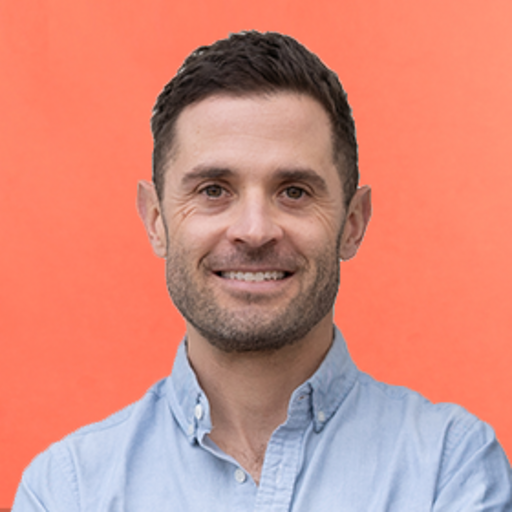
Ian Andersen
Co-Founder, Sunnyside
Ian Andersen co-founded Sunnyside after his own life was deeply affected by heavy alcohol use.
His mother passed away from alcohol related causes when he was eleven. His father found sobriety through AA. Three of his grandparents died from alcohol related issues. This isn't abstract for him. It's the reason Sunnyside exists.
Ian has taken naltrexone daily for about two years now. Not because he quit drinking, but because he wanted to change how much of a hold it had on him.
Here's how he describes it:
“In 2018, I took three months off drinking, and that was transformative. My drinking came down a lot at that point. But more recently, I wanted to work on the final piece, I have a hard time stopping once I start. So I started looking into naltrexone, and it's been really helpful to quiet the alcohol noise that happens during the week. If I do choose to drink, I'm just not chasing toward the next one so much anymore. I'm not perfect, and naltrexone isn't perfect, but it's been the single biggest thing that's helped me live a healthier life. I still enjoy a couple drinks a few times a month. I'm just different than I was.”
— Ian Andersen, Co-Founder, Sunnyside
This is why Sunnyside Med exists. Not for a rock bottom story. For someone who just wanted less, and found a way to get there.
The Sunnyside App
Sunnyside started in 2020 as an app to help people drink less, before Sunnyside Med or naltrexone were part of the picture. Since then, over 600,000 people have used it.
Inside the app: daily drink tracking, weekly planning, resources, text check-ins, and a community of people doing the same thing you are.
If you're on Sunnyside Med, the app comes with it. If you ever stop the medication, the app and everything you've tracked stays with you.
The Medical Backing

Dr. Hrishikesh Belani, M.D.
Sunnyside Medical Advisor
“I prescribe naltrexone regularly as a safe, effective way to curb heavy drinking. I highly recommend pairing it with a behavioral health program like Sunnyside.”
— Dr. Hrishikesh Belani, M.D., Sunnyside Medical Advisor
A licensed clinician reviews every Sunnyside Med application to make sure naltrexone is appropriate and safe for you before anything is prescribed.
A Therapist's Perspective
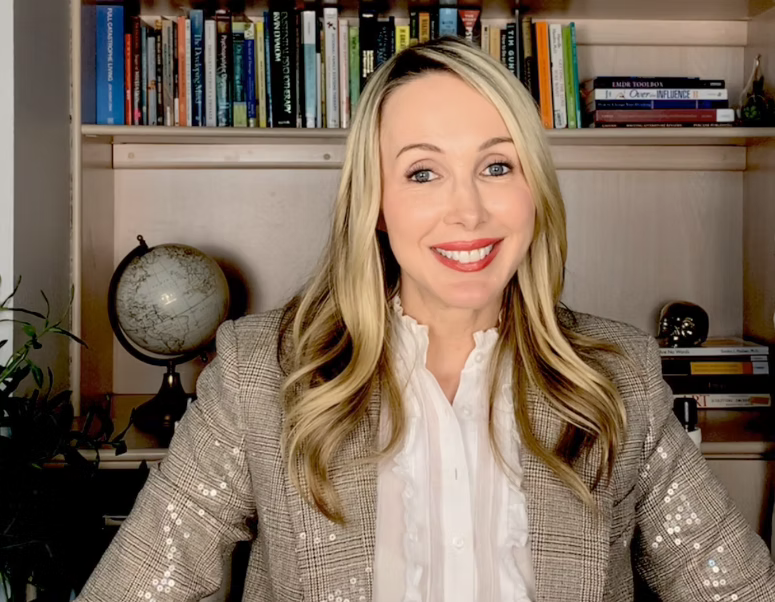
Merrilee Burke, LMFT
Licensed Marriage and Family Therapist
“When naltrexone helps reduce the cravings for alcohol, that clears the path for someone to work on any underlying psychological factors that could be influencing their drinking. Simultaneously addressing the neurological and personal aspects of someone's relationship with alcohol gives them a better chance of meeting their goals.”
— Merrilee Burke, LMFT
What To Do Next
If you recognized yourself anywhere on this page, the pull toward the next drink, the Googling at midnight, the diets and dry months that only half worked, you already know what's going on. Naltrexone has been sitting there for 30 years, waiting for someone to actually offer it to you instead of someone already in crisis.
That's what Sunnyside Med does.
FAQ
Questions People Ask
Do I need to have a drinking problem to try this?
No. Sunnyside Med is built for people in the gray area, people who drink more than they'd like but haven't hit any kind of crisis point.
Is naltrexone safe?
A licensed clinician reviews every application before prescribing. Naltrexone isn't appropriate for people currently using opioids, taking Suboxone or buprenorphine, with significant liver disease, or who are pregnant or breastfeeding. Your provider screens for this during review.
How is this different from just trying to use willpower?
Naltrexone works at the brain level to reduce alcohol's reward response, instead of relying on willpower alone to resist a craving that's still fully there.
Are there side effects?
Naltrexone has been FDA-approved for over 30 years, so there's a lot of long-term data on it. Side effects are typically mild and temporary, usually fading within the first one to two weeks of consistent use. You may feel nauseous or lightheaded in the beginning of your journey
How long before I notice a difference?
Most people notice something shifting after two to four weeks of daily use, cravings tend to decrease and alcohol can start to feel less rewarding. The full effect can take one to two months to show up.
Do I have to stop drinking completely?
No. Sunnyside Med isn't an abstinence program. Most members are aiming to drink less, not necessarily to quit entirely, though some do choose to stop completely. The goal is whatever “less” means for you.
What's actually included?
Compounded naltrexone, prescribed and shipped to you, plus the Sunnyside app for habit tracking, coaching, and community.
How does the process actually work?
A short online assessment, reviewed by a licensed clinician. If it's approved, your prescription ships to your door, alongside access to the app and coaching.
What does it cost, and is it covered by insurance?
There's a one-time $50 fee for the initial review by a licensed provider. After that, it's $99 a month, billed quarterly, which includes three months of the Sunnyside app free. Sunnyside Med isn't covered by insurance. If you have an HSA or FSA, you can use those funds toward Sunnyside Med, though it's worth confirming eligibility with your provider first.
What if it doesn't work for me?
Cancel anytime, no contract, directly from your account.
See If Sunnyside Med Is Right For You
A short assessment, reviewed by our clinical team